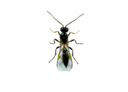
General The black tea thrips , Heliothrips haemorrhoidalis , is widely distributed in the tropics and subtropics; it also occurs in greenhouses of temperate areas, is highly polyphagous, and has been
Biological control of caterpillars Caterpillars are highly destructive pests that feed on leaves, stems and fruits, causing serious damage to greenhouse and field crops. Their feeding reduces photosyn
General The black bean aphid, Aphis fabae , is widespread in temperate regions, where it is a serious economic pest of beans. It is highly polyphagous, and attacks a wide range of other crops. Damage
General The hemp russet mite ( Aculops cannabicola ) belongs to the family Eriophyidae (gall and rust mites). It does not produce galls but lives freely (vagrant) on hemp/cannabis plants. Aculops cann
Parva . At the same time, Vidi Parva should be tank mixed with Trianum-P to prevent the entry of diseases such as Pythium , Fusarium and Rhizoctonia . Trianum-P
Biological control of leafhoppers Leafhoppers are highly mobile, sap-sucking pests that feed on plant leaves, causing discoloration, stippling and leaf curling. Their feeding reduces photosynthesis, w
Biological control of mealybugs and scales Mealybugs and scale insects are persistent pests that feed on plant sap, weakening crops and producing honeydew that leads to sooty mould. Infestations reduc
General The large blackberry aphid, Amphorophora rubi , is very similar to the large raspberry aphid Amphorophora idaei . As both aphid species are host specific the host plant is the simplest method
General The large raspberry aphid, Amphorophora idaei, is the most important aphid species found on raspberries in Europe. It only feeds on raspberry. Damage symptoms Large raspberry aphids rarely rea
Overview They belong to the Curculionidae family, which is made up of more than 40,000 species. They have very hard bodies and are small in size. They prefer crops from the Solanaceae family, especial