which make them appear skeletonized. The last two instars may eat the entire leaf except for the midrib or other large veins. On tomatoes, the tomato looper
however, can also feed on root hairs, rootlets, and tender root, stem and leaf tissue. Later instars may even feed on plant stems. The injuries caused by
result of larvae feeding on root hairs and tender roots as well as stem and leaf tissue and fruits. The lesions caused by feeding larvae provide invasion
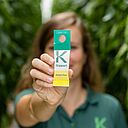
right corner Hang the cylinder horizontally from a crop wire, branch, or leaf stalk by winding the label around it and sticking the end of the label back
thereby producing holes. Finally, at the third larval instar, the whole leaf is attacked and surrounded by a dense silken mass. The larvae hide inside
many ornamental crops. Western Flower Thrips Frankliniella occidentalis on a leaf Life cycle and appearance of Western flower thrips The western flower thrips
in greenhouse and field crops. Their feeding and virus transmission cause leaf deformation, silvering and fruit damage, leading to reduced yield and ma [...] hatching, the larvae begin to feed on plant tissue on the underside of the leaf. The larvae are smaller than the adults and lack wings. Depending on the
from several trial plots. Cumulative # Spidex on infested leaf Mean mobile Spidex per leaf 3,0 2,5 2,0 1,5 1,0 0,5 0,75 2,38 Current Spidex Spidex
underside of leaves. This causes a window effect where the epidermis of the upper leaf surface remains undamaged. Young caterpillars are often found in groups,