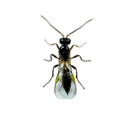
Biological control of leafhoppers Leafhoppers are highly mobile, sap-sucking pests that feed on plant leaves, causing discoloration, stippling and leaf curling. Their feeding reduces photosynthesis, w
General Mites of the family Tenuipalpidae have a worldwide distribution and can be found on many cultivated plants. Several species have been reported, especially by growers of greenhouse ornamentals
General The shallot aphid, Myzus ascalonicus , is extremely polyphagous. It feeds on crops such as onions, shallots, strawberries, lettuce, brassicas and potatoes and many ornamentals . The shallot ap
General The buckthorn- potato aphid , Aphis nasturtii , has a nearly cosmopolitan distribution and is a major pest of potatoes, where it also transmits viruses. It also attacks a large number of other
General The large blackberry aphid, Amphorophora rubi , is very similar to the large raspberry aphid Amphorophora idaei . As both aphid species are host specific the host plant is the simplest method
General The large raspberry aphid, Amphorophora idaei, is the most important aphid species found on raspberries in Europe. It only feeds on raspberry. Damage symptoms Large raspberry aphids rarely rea
General Acyrthosiphon malvae rogersii is a pest of strawberry that is widely distributed in northern and western Europe. Damage symptoms Wingless aphids may form large colonies on young strawberry fol
General The black tea thrips , Heliothrips haemorrhoidalis , is widely distributed in the tropics and subtropics; it also occurs in greenhouses of temperate areas, is highly polyphagous, and has been
General The cottony cushion scale, Icerya purchasi , is considered to have originated in Australia. It was accidentally introduced to California in about 1868 and devastated the citrus industry there
General The codling moth ( Cydia pomonella ) is a notorious, worldwide pest of apple and also occasionally of pear, quince, peach and other fruits. It is very common in Europe. Damage symptoms After i