
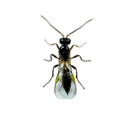





Biological control of beetles Beetles can cause serious damage in many greenhouse and field crops by feeding on leaves, roots, or fruits, leading to reduced growth and yield loss. Effective beetle con
General Sciarid flies constitute the family of Sciaridae. The species that cause most damage to crops belong to the genera Bradysia and Lycoriella . Lycoriella species are mainly found in commercial m
General The black vine weevil, Otiorhynchus sulcatus, is a pest in many ornamental crops (e.g. rhododendron, cyclamen and azalea), as well as in strawberries and other fruit crops in both temperate an
General The cabbage moth (Mamestra brassicae) is a highly polyphagous defoliator. Besides being a major cabbage pest, it feeds on 70 plants of 22 families, among them crops such as sweet pepper, tomat
General The garden chafer ( Phyllopertha horticola ) is a beetle from the Scarabaeidae family. It does most of its damage in the larval stage when it feeds on roots of grasses and clover. The adults f
General The black bean aphid, Aphis fabae , is widespread in temperate regions, where it is a serious economic pest of beans. It is highly polyphagous, and attacks a wide range of other crops. Damage
Biological control of flies Flies are a common pest problem in greenhouse and field crops, where they disturb plant growth, spread diseases and affect crop hygiene. Their larvae can damage roots and g
General The obscure mealy bug ( Pseudococcus viburni ) (formerly known as Pseudococcus affinis) originates from South America, but can now be found in many parts of the world with a temperate climate.
What are two-spotted spider mites? Two-spotted spider mite ( Tetranychus urticae ) is a pest of many crops throughout the world. Despite their small size, they are capable of very rapidly doing severe
General The broad mite (Polyphagotarsonemus latus) occurs in the tropics and in greenhouses in temperate regions. The broad mite (Polyphagotarsonemus latus) has a wide range of host plants, especially