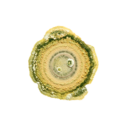
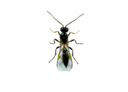
General The hemp russet mite ( Aculops cannabicola ) belongs to the family Eriophyidae (gall and rust mites). It does not produce galls but lives freely (vagrant) on hemp/cannabis plants. Aculops cann
Biological control of leafhoppers Leafhoppers are highly mobile, sap-sucking pests that feed on plant leaves, causing discoloration, stippling and leaf curling. Their feeding reduces photosynthesis, w
weather, these urticating hairs can remain allergenic for months. From the 5th instar on, the larvae start building silken nests at the base of lower branches
spot in the anal region. The cylindrical egg masses range in length from 4 to 5 cm. They are covered with the scales of the female anal tuft, which mimics
General Mites of the family Tenuipalpidae have a worldwide distribution and can be found on many cultivated plants. Several species have been reported, especially by growers of greenhouse ornamentals
Biological control of leaf miners Leaf miners are damaging pests that tunnel through leaves, reducing photosynthesis and weakening plant growth. Their feeding patterns cause visible leaf damage, lower
General The shallot aphid, Myzus ascalonicus , is extremely polyphagous. It feeds on crops such as onions, shallots, strawberries, lettuce, brassicas and potatoes and many ornamentals . The shallot ap
General The buckthorn- potato aphid , Aphis nasturtii , has a nearly cosmopolitan distribution and is a major pest of potatoes, where it also transmits viruses. It also attacks a large number of other
General The green peach aphid ( Myzus persicae subsp. persicae ) is an important insect pest in sweet pepper, tomato, cucumber and many other greenhouse crops. The aphid may originate from Asia, where