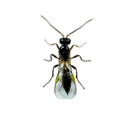
General Since the start of its invasion in 2008/2009, the spotted wing drosophila, which is originally from Asia, has spread extensively in North and South America and Europe where it has caused sever
General The cabbage leafroller (Clepsis spectrana) is native to North-West Europe. It is a highly polyphagous species causing damage to field grown cabbage, apple, pear as well as maple, popular, spru
General The golden twin-spot moth or tomato looper ( Chrysodeixis chalcites ) belongs to the family of Noctuidae . It is a tropical and subtropical species originating in the Mediterranean and norther
General The box tree moth ( Cydalima perspectalis ) belongs to the family of Crambidae . It originates in the temperate and sub-tropical regions of East Asia (Japan, Korea, China). The box tree moth (
General The diamond back moth (Plutella xylostella) belongs to the family of Plutellidae . It only attacks Brassicaceae species, including cruciferous weeds. The diamond back moth (Plutella xylostella
General The tomato moth (Lacanobia oleracea) is a particularly a pest in greenhouses but can also inflict damage on outdoor crops. It is a polyphagous species feeding on plants of 14 families includin
General The oak processionary moth ( Thaumetopoea processionea ), is a major pest of oak in many European countries. The common and scientific names of this moth refer to the behaviour of the larvae t
General Shore flies ( Scatella tenuicosta ) occur very commonly, often in the vicinity of water. They feed on algae. Other shore fly species have diverse feeding habits but the larvae of most species
General The tomato russet mite (Aculops lycopersici , also referred to as Vasates lycopersici, Vasates destructor and Phyllocoptes destructor in older publications) belongs to the family Eriophyidae.
General The broad mite (Polyphagotarsonemus latus) occurs in the tropics and in greenhouses in temperate regions. The broad mite (Polyphagotarsonemus latus) has a wide range of host plants, especially