humid environment (>80% relative humidity) and at temperatures between 20 and 27°C (68 and 81°F). Combined use Should be used in combination with Spidex
necessary, the product can be stored for 1-2 days. Storage temperature 17-20°C/63-68°F. Storage conditions In the dark, provide ventilation to prevent
conditions Amblyseius swirskii is most effective at temperatures between 20 and 32°C (68 and 90°F). It is not effective at temperatures below 18°C/64°F
strategy for your situation. Environmental conditions Most effective between 20 and 25°C (68 and 77°F). Effectivity is reduced at temperatures above 30°C/86°F
bucket containing at least 2 litres of water per sachet (water temperature: 15-20°C/59-68°F) Stir well and leave the contents to soak for five minutes Stir [...] removed, especially if finer than 0.3 mm (50 mesh) Use a maximum pressure of 20 bar/290 psi (on nozzle) The spray nozzle opening should be at least 0.5 mm
least six litres (1.5 gallons) of water per sachet (water temperature: 15-20°C/59-68°F) Stir well and leave the contents to soak for five minutes Stir [...] removed, especially if finer than 0.3 mm (50 mesh) Use a maximum pressure of 20 bar/290 psi (on nozzle) The spray nozzle opening should be at least 0.5 mm
reach the same length as the body, giving an overall combined length of up to 20 mm. The 'females' are actually hermaphrodites with fertilization occurring
northern Africa. The larva is highly polyphagous and feeds on plants of over 20 families, among them crops such as cauliflower, corn, crucifer, soybean, potato
but has also been identified on more than 200 plant species from more than 20 families. Various vegetable and ornamental crops grown in greenhouses are
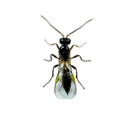
l conditions The parasitic wasp is most effective at temperatures between 20°C and 25°C (68 and 77°F). At a 24 hours average temperature below 17°C/63°F