Buxaceae . The plant is also commonly named box (mostly in English-speaking countries) or boxwood (in North America). Buxus are evergreen and slow-growing
About The cauliflower, along with several other vegetables, belongs to the species Brassica oleracea of the genus Brassica which is part of the family of Brassicaceae . Broccoli, Brussels sprouts, cab
About Broccoli is a tasty, green plant. When it comes to botanical classification, the broccoli plant is categorized as part of the Italica cultivar group that belongs to the species Brassica oleracea
and the majority of the different species derive from East Asia. Especially in China a wide range of varieties and cultivars has been developed for commercial
with a stem that has sharp thorns. The flowers of the rose plant can vary in shape and size, but are often ornate and bright coloured. Colours range from
production date when stored in a freezer (-18°C), and 1 year when stored in a refrigerator (4-6°C). Storage temperature Preferably in a freezer (-18°C), and [...] pheromones to other areas Application Place the dispenser in the trap and place the trap in the right position as indicated for the particular trap Wash [...] effective for a maximum of 6 weeks Dosage In general two or four dispensers per hectare. Combined use Use in combination with a suitable trap. Storage
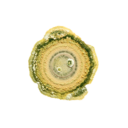
disease management in agriculture and horticulture. Advantages of Trichoderma harzianum The usage of Trichoderma harzianum T-22 in sustainable agriculture [...] Trichoderma harzianum T-22 is a species of beneficial fungus commonly used in agriculture and horticulture for its various beneficial properties. This fungus [...] absorbed better. This leads to a stronger and more uniform crop resulting in better yield and quality. Induced resistance: Trichoderma harzianum reinforces
Saissetia coffeae , occurs widely in tropical regions and in greenhouses throughout the world. It is a severe pest in coffee and citrus. Many ornamental [...] vary from 2 to 4.5 mm. The young nymphs are white to yellowish, more oval in form and with a raised H-pattern on the dorsal surface. All instars live on
Natupol Fly is supplied as pupae in cardboard tubes. Use 15 ml of pupae per square metre as standard. Modify this quantity in relation to the number of flowers [...] often take longer than a week. In the event of having to use Natupol Fly at a temperature below 15 ˚C, first mature them in a warm environment. Release Natupol [...] with lids, for instance, or bags. Do not scatter the pupae loose. Experiences in practice suggest that the side effects of chemical applications on Natupol
Keroplatidae) have been associated with root damage in potted orchids, especially in greenhouses in the Netherlands. Dutch farmers call these larvae potworms [...] the roots produce large numbers of new branches. This ultimately results in a reduced number of flower stems and a longer vegetative stage. The root damage [...] The head is brown or reddish. The pupae are white to yellow and embedded in a dense web. Adult flies are long and slender and have a dark brown head with