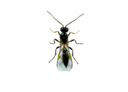
General The diamond back moth (Plutella xylostella) belongs to the family of Plutellidae . It only attacks Brassicaceae species, including cruciferous weeds. The diamond back moth (Plutella xylostella
General The carnation tortrix ( Cacoecimorpha pronubana ) is a Mediterranean species belonging to the family of Tortricidae . It occurs in the Middle East, North Africa, the USA, Europe, including Mal
General The silver-Y moth ( Autographa gamma ) is a migrant moth that appears in northern parts of Europe until November, migrating back to southern Europe for the winter months. The moths can fly 2,0
General The cotton aphid ( Aphis gossypii ) is an extremely polyphagous aphid found on more than 700 plant species. Crop plants attacked by this aphid include cotton, citrus, coffee, cocoa, eggplant,
General The tobacco aphid ( Myzus persicae subsp. nicotianae ) probably evolved from the peach potato aphid in the Far East and is a key pest of tobacco crops in both the United States and South Ameri
Biological control of aphids Aphids are among the most harmful pests in greenhouse and field crops, causing plant stress, virus transmission and yield loss. Effective aphid control is essential for ma
Biological control of thrips Thrips are among the most challenging pests in greenhouse and field crops. Their feeding and virus transmission cause leaf deformation, silvering and fruit damage, leading
General The shallot aphid, Myzus ascalonicus , is extremely polyphagous. It feeds on crops such as onions, shallots, strawberries, lettuce, brassicas and potatoes and many ornamentals . The shallot ap
General The rose aphid, Macrosiphum rosae , is a serious and often abundant pest of roses. It is virtually cosmopolitan and widely spread in Europe. Damage symptoms Infestations with rose aphids retar
General The buckthorn- potato aphid , Aphis nasturtii , has a nearly cosmopolitan distribution and is a major pest of potatoes, where it also transmits viruses. It also attacks a large number of other