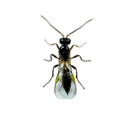
Biological control of leafhoppers Leafhoppers are highly mobile, sap-sucking pests that feed on plant leaves, causing discoloration, stippling and leaf curling. Their feeding reduces photosynthesis, w
General These three species of Diaspi s are very similar in their appearance and damage symptoms. Here, the Boisduval scale is described in more detail, as it is the most important one. The Boisduval
General The pear psylla, Cacopsylla pyri , is a widely distributed pest of pear in central Europe and can inflict serious damage in pear orchards. Damage symptoms Pear psylla feeding leads to growth i
General The oak processionary moth ( Thaumetopoea processionea ), is a major pest of oak in many European countries. The common and scientific names of this moth refer to the behaviour of the larvae t
General The black bean aphid, Aphis fabae , is widespread in temperate regions, where it is a serious economic pest of beans. It is highly polyphagous, and attacks a wide range of other crops. Damage
General The chafers are beetles of the Scarabaeidae family. The larvae of both species live in the soil and feed on the roots of many plants. They are a serious pest that can cause substantial damage.
General The leek moth is present throughout Europe. It is also found in some Asian countries and has been introduced to parts of Canada. The larvae of Acrolepiopsis assectella feed on cultivated Alliu
General The woolly aphid, Eriosoma lanigerum , is a serious worldwide apple pest. It is probably of North American origin and has been distributed to other parts of the world mainly via infested apple
Overview They belong to the Curculionidae family, which is made up of more than 40,000 species. They have very hard bodies and are small in size. They prefer crops from the Solanaceae family, especial
General Impatiens thrips (Echinothrips americanus) is an increasing problem in greenhouse cultivation, having spread to many countries within the last 30 years. The thrips have mostly been able to spr