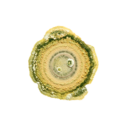
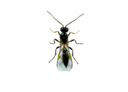
General Shore flies ( Scatella tenuicosta ) occur very commonly, often in the vicinity of water. They feed on algae. Other shore fly species have diverse feeding habits but the larvae of most species
General Sciarid flies constitute the family of Sciaridae. The species that cause most damage to crops belong to the genera Bradysia and Lycoriella . Lycoriella species are mainly found in commercial m
General Since the start of its invasion in 2008/2009, the spotted wing drosophila, which is originally from Asia, has spread extensively in North and South America and Europe where it has caused sever
General The larvae of crane flies , called leatherjackets, live in the soil and feed on roots and shoots (which they pull into the ground of mainly grasses and cereal crops. The adults do not cause an
General Larvae of the flies Lyprauta cambria, Proceroplatus trinidadensis and Lyprauta chacoensis (family Keroplatidae) have been associated with root damage in potted orchids, especially in greenhous
General The silver-Y moth ( Autographa gamma ) is a migrant moth that appears in northern parts of Europe until November, migrating back to southern Europe for the winter months. The moths can fly 2,0
General The diamond back moth (Plutella xylostella) belongs to the family of Plutellidae . It only attacks Brassicaceae species, including cruciferous weeds. The diamond back moth (Plutella xylostella
General The horse-chestnut leaf miner, Cameraria ohridella , probably originates from natural stands of the European horse-chestnut in Greece, Albania and Macedonia. It was first observed attacking or
General The garden chafer ( Phyllopertha horticola ) is a beetle from the Scarabaeidae family. It does most of its damage in the larval stage when it feeds on roots of grasses and clover. The adults f
General The green peach aphid ( Myzus persicae subsp. persicae ) is an important insect pest in sweet pepper, tomato, cucumber and many other greenhouse crops. The aphid may originate from Asia, where