with the hive. Download checklist Positioning advice Introduce bumblebees 4-7 days before flowering begins. Once the flowers open, the bumblebees will
the hives can be placed higher inside the crop, at a minimum height of 1.4 meters above the ground, particularly in dense crop areas. On the darkest days
to the ground. Pack size 3,000 million - 4 sachets of 750 million in a box Developmental stage Infective third-stage larvae (L3). Concentration 86% Steinernema [...] avoid blockage, all filters should be removed, especially if finer than 0.3 mm (50 mesh) Use a maximum pressure of 20 bar/290 psi (on nozzle) The spray [...] pumps Water tank temperature must not exceed 25°C/77°F and pH must be between 4 and 8 Distribute the spraying solution evenly over the soil/medium surface
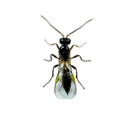
soon after planting of the crop. Introduction rates typically range from 0.25-4 per m 2 /release. Releases should be repeated a number of times. Consult a [...] appearance of Aphelinus abdominalis An adult Aphelinus abdominalis is 2.5 to 3 mm in length, with short legs and short antennae. Females have a black thorax
Tefluthrin Chemical reference Casea 1 Billion/ha Chemical reference Average of 4 fields in Italy Since 1986, many years of experience have gone into the selection
cerasicola Adult parasitic wasps of Ephedrus cerasicola are black, approx. 4-5 mm in length. The parasitic wasp lays an egg inside the aphid where the larva
mites to reproduce within the sachet and gradually emerge over a period of 4-6 weeks. Moisture retention Ulti-Mite's special foil material retains essential
optimal effectiveness combine with an adjuvant such as Addit or Squad Mix with 3-4 litres of water (15-20°C) per 500 gram of Mycotal and stir into a slurry Fill
for processing in Portugal are: Tomato (14,500 hectares), Peas (3,500 ha), (Broccoli 4,000 ha), (Pepper 1,000 ha), Zucchini (150 ha), Sweet potato (120
adults prey mainly in the upper 1-2 cm of the soil. Adult females consume up to 4.5 thrips pupae per day. Life cycle of Stratiolaelaps scimitus Stratiolaelaps [...] becoming light brown as they age. The eggs are white, oval, and approximately 0.3 mm in length. Best conditions for use of Stratiolaelaps scimitus For optimal