Pests Young larvae of various thrips species. Crops Do not use in tomato. Mode of action Predatory mites use their piercing mouthparts to extract the contents of their prey. Pack size 50,000 predatory
Pests All species of spider mites . Mode of action After emerging from the pupa, adult gall-midges actively search for spider mite colonies and deposit eggs next to the spider mites . Once emerged, th
Pests Two-spotted spider mite ( Tetranychus urticae ) and other Tetranychus spp., except Tetranychus evansi . Mode of action Predatory mites use their piercing mouthparts to extract the conten
Pests Various species of thrips . Crops Do not use in tomato. Mode of action The predatory bugs actively search for prey. With their piercing mouthparts, they extract the contents of their prey, leavi
Vidi Terrum supports the plant's metabolism leading to better fruit set and size, and better bulb size. Crops All crops. Mode of action Vidi Terrum provides the plant with extra energy for the formati
Pests Two-spotted spider mite ( Tetranychus urticae ). Crops Especially tomato (can cause damage to other plants). Mode of action The predatory bugs actively search for prey. With their piercing mouth
Pests Greenhouse whitefly ( Trialeurodes vaporariorum ), tobacco whitefly ( Bemisia tabaci ), eggs and caterpillars of tomato leaf miner moth ( Tuta absoluta ) and other moths. Also feeds on two spott
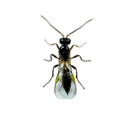
Pests Leaf miners ( Lyriomyza spp.). Mode of action Adult female parasitic wasps of Diglyphus isaea kill second and third instar leaf miner larvae in the mine and lay their eggs next to them. The eggs
Pests Leaf miners ( Lyriomyza spp.). Mode of action The adult female parasitic wasps of Dacnusa sibirica preferably lay their eggs inside first and second instars of the leaf miner larva. The parasiti
Pests Greenhouse whitefly ( Trialeurodes vaporariorum ); Tobacco whitefly ( Bemisia tabaci ). Mode of action Adult female parasitic wasps parasitise the third and fourth larval stage of the whitefly .