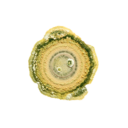
cultivation 4 per year 15 kg/ha 1 per crop 15 kg/ha Specific pest controlled: Reduction of soil-borne Pythium, Rhizoctonia and Fusarium Other Specific [...] potential to provoke sensitising reactions Operator Protection Engineering control of operator exposure must be used where reasonably practicable in addition
reasonable control. Without prejudice to the generality of the foregoing the following shall be regarded as causes beyond the Company’s reasonable control 8.9 [...] increase in the cost to the Company which is due to any factor beyond the control of the Company (such as without limitation any foreign exchange fluctuation [...] Goods for any reason other than any cause beyond the Company’s reasonable control or the Customer’s fault and the Company is accordingly liable to the Customer
sunrise or after 10:00 in the morning, depending on the system you use to control the opening or closing of the hives. The bumblebee hives should be closed [...] correct height. The transmitter of the Wireless BeeHome system can be controlled in different ways. Either by using a timer or by connecting the transmitter [...] is at its minimum. The opening and closing system is pneumatic and is controlled by a timer or the climate computer. On a rare occasion, when air pressure
Transmitter 13 13 Controlling the transmitter with a timer 13 Recommended opening and closing times for hives (timer) 13 Controlling the transmitter [...] connect the transmitter to the climate computer in the greenhouse. Once controlled by the timer or climate computer, the transmitter will emit an ‘open’ [...] should be. 12 5 Operating the Wireless BeeHome system 5.1 Transmitter Controlling the transmitter with a timer Plug the supplied timer into the power socket
General The leek moth is present throughout Europe. It is also found in some Asian countries and has been introduced to parts of Canada. The larvae of Acrolepiopsis assectella feed on cultivated Alliu
General The hemp russet mite ( Aculops cannabicola ) belongs to the family Eriophyidae (gall and rust mites). It does not produce galls but lives freely (vagrant) on hemp/cannabis plants. Aculops cann
General The chafers are beetles of the Scarabaeidae family. The larvae of both species live in the soil and feed on the roots of many plants. They are a serious pest that can cause substantial damage.
General Larvae of the flies Lyprauta cambria, Proceroplatus trinidadensis and Lyprauta chacoensis (family Keroplatidae) have been associated with root damage in potted orchids, especially in greenhous
General The brown soft scale Coccus hesperidum is very common in tropical and sub-tropical regions and is also a common pest in greenhouses throughout the world. C. hesperidum has many host plants, in
General The cotton aphid ( Aphis gossypii ) is an extremely polyphagous aphid found on more than 700 plant species. Crop plants attacked by this aphid include cotton, citrus, coffee, cocoa, eggplant,