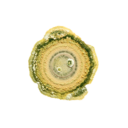
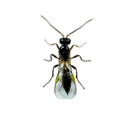
General The diamond back moth (Plutella xylostella) belongs to the family of Plutellidae . It only attacks Brassicaceae species, including cruciferous weeds. The diamond back moth (Plutella xylostella
General The carnation tortrix ( Cacoecimorpha pronubana ) is a Mediterranean species belonging to the family of Tortricidae . It occurs in the Middle East, North Africa, the USA, Europe, including Mal
General The silver-Y moth ( Autographa gamma ) is a migrant moth that appears in northern parts of Europe until November, migrating back to southern Europe for the winter months. The moths can fly 2,0
General The cotton aphid ( Aphis gossypii ) is an extremely polyphagous aphid found on more than 700 plant species. Crop plants attacked by this aphid include cotton, citrus, coffee, cocoa, eggplant,
General The tobacco aphid ( Myzus persicae subsp. nicotianae ) probably evolved from the peach potato aphid in the Far East and is a key pest of tobacco crops in both the United States and South Ameri
General Larvae of the flies Lyprauta cambria, Proceroplatus trinidadensis and Lyprauta chacoensis (family Keroplatidae) have been associated with root damage in potted orchids, especially in greenhous
General The mottled arum aphid, Neomyzus circumflexus , has a cosmopolitan distribution and a wide host range. In temperate climates it is primarily a pest in greenhouses where it attacks many ornamen
General The strawberry aphid, Chaetosiphon fragaefolii , has a cosmopolitan distribution and is the most important aphid pest of strawberries. It can cause direct damage by feeding and transmits virus
General The blueberry aphid, Ericaphis fimbriata or Ericaphis scammelli , is most likely of North American origin and was probably introduced into Europe with plant material. It feeds on blueberries a
General The yellow rose aphid , Rhodobium porosum , is probably of North American origin but is now widely distributed in Europe, North Africa, parts of Asia and South America. It attacks plants of th