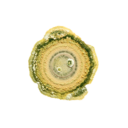
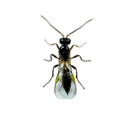
General The diamond back moth (Plutella xylostella) belongs to the family of Plutellidae . It only attacks Brassicaceae species, including cruciferous weeds. The diamond back moth (Plutella xylostella
General The cabbage moth (Mamestra brassicae) is a highly polyphagous defoliator. Besides being a major cabbage pest, it feeds on 70 plants of 22 families, among them crops such as sweet pepper, tomat
General The larvae of crane flies , called leatherjackets, live in the soil and feed on roots and shoots (which they pull into the ground of mainly grasses and cereal crops. The adults do not cause an
General Click beetles are elongate beetles with a hard exoskeleton, with the head deeply retracted into the thorax. When disturbed they lie on their back feigning death and then suddenly propel themse
General The onion thrips (Thrips tabaci) is distributed throughout the world. It is found outdoors on many plants and particularly damaging on onions, leek, and in greenhouses on cucurbits, tomato, sw
General The goat moth ( Cossus cossus ), is a pest of broad-leafed trees. It is most often found in birch, ash, willow and elm but can also attack fruit trees. It is widespread in Europe. Damage sympt
control of our beneficial nematodes. Each of the nematodes produced by Koppert has been selected to target specific pest insects. How does it work? After
General Aspidiotus nerii , the oleander scale or white scale belongs to the Coccoidea and has an almost worldwide distribution. Host plants include olive, apple, mango, palms, oleander and citrus. Dam
General The obscure mealy bug ( Pseudococcus viburni ) (formerly known as Pseudococcus affinis) originates from South America, but can now be found in many parts of the world with a temperate climate.
General The golden twin-spot moth or tomato looper ( Chrysodeixis chalcites ) belongs to the family of Noctuidae . It is a tropical and subtropical species originating in the Mediterranean and norther