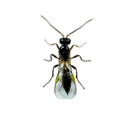
General The greenhouse whitefly ( Trialeurodes vaporariorum ) is one of the major pests of vegetable and ornamental crops in greenhouses throughout the world. The greenhouse whitefly ( Trialeurodes va
What are two-spotted spider mites? Two-spotted spider mite ( Tetranychus urticae ) is a pest of many crops throughout the world. Despite their small size, they are capable of very rapidly doing severe
General The tomato russet mite (Aculops lycopersici , also referred to as Vasates lycopersici, Vasates destructor and Phyllocoptes destructor in older publications) belongs to the family Eriophyidae.
General Sciarid flies constitute the family of Sciaridae. The species that cause most damage to crops belong to the genera Bradysia and Lycoriella . Lycoriella species are mainly found in commercial m
General The tomato leaf miner (Liriomyza bryoniae) has many host plants and has caused crop damage in many parts of the world, including North Africa, Europe and northern Asia. In warmer regions, the
General The tomato leaf miner (Tuta absoluta), a major pest of field- and greenhouse-grown tomatoes, belongs to the family of Gelechiidae . It is oligophagous, feeding mainly on Solanaceae species . T
General The tomato moth (Lacanobia oleracea) is a particularly a pest in greenhouses but can also inflict damage on outdoor crops. It is a polyphagous species feeding on plants of 14 families includin
General The golden twin-spot moth or tomato looper ( Chrysodeixis chalcites ) belongs to the family of Noctuidae . It is a tropical and subtropical species originating in the Mediterranean and norther
General The tobacco whitefly ( Bemisia tabaci ) belongs to the family Aleyrodidae , and the sub-family Aleyrodinae . This insect was first identified on tobacco in Greece in 1889, hence the name tabac
Pests Larvae of various species of thrips (first and second larval stages); eggs and larvae of greenhouse whitefly ( Trialeurodes vaporariorum ) and tobacco whitefly ( Bemisia tabaci ). Crops Do not u