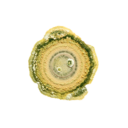
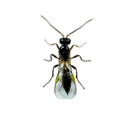
General The tobacco whitefly ( Bemisia tabaci ) belongs to the family Aleyrodidae , and the sub-family Aleyrodinae . This insect was first identified on tobacco in Greece in 1889, hence the name tabac
General The greenhouse whitefly ( Trialeurodes vaporariorum ) is one of the major pests of vegetable and ornamental crops in greenhouses throughout the world. The greenhouse whitefly ( Trialeurodes va
General The obscure mealy bug ( Pseudococcus viburni ) (formerly known as Pseudococcus affinis) originates from South America, but can now be found in many parts of the world with a temperate climate.
General The cactus mealybug Atrococcus mamillariae (formerly known as Spilococcus cactearum ) is a pest of cacti and other succulents. It was first described in England but its origin is not clear. It
General Pseudococcus longispinus occurs naturally in tropical and sub-tropical regions, but these days it is widespread throughout the world. The range of host plants of Pseudococcus longispinus is le
General The citrus mealybug ( Planococcus citri ) has a world-wide distribution and many and diverse host plants. In temperate regions of the world this mealybug poses a problem in greenhouse horticul
General The American serpentine leaf miner ( Liriomyza trifolii ) originates from North America, but occurs also in Europe since about 1976. The American serpentine leaf miner ( Liriomyza trifolii ) i
General The onion thrips (Thrips tabaci) is distributed throughout the world. It is found outdoors on many plants and particularly damaging on onions, leek, and in greenhouses on cucurbits, tomato, sw
General The Pine processionary moth (Thaumetopoea pityocampa), is a major pest of pine trees around the Mediterranean Sea. It is most conspicuously damaging on pine plantations, or amenity pines. Dama
Biological control of caterpillars Caterpillars are highly destructive pests that feed on leaves, stems and fruits, causing serious damage to greenhouse and field crops. Their feeding reduces photosyn