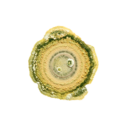
fuse in the middle with a basidiospore of the other mating type so that H-shaped structures are formed. These can germinate directly or form secondary sporidia
Agrotis spp. have pale grey to grey-brown forewings with a faint kidney-shaped marking and a red spot. They have broad hindwings, evenly light or dark
moth (Mamestra brassicae) has grey-brown to black forewings, with a kidney-shaped white-rimmed marking in the middle. The hindwings are light brown with a
mouthparts. The female is larger (3 mm) and voluminous, has an elongated oval shape and has no wings. The body is covered with a fine waxy material and have
to attract flies as pollinators. These adaptations include unique colors, shapes, and odors that appeal to the preferences of different fly species. Unlike
of damage done by the tomato leaf miner ( Tuta absoluta) are the blotch-shaped mines in the leaves. Caterpillars prefer leaves and stems, but they may
brown heads and whitish bodies, and normally lie in a characteristic 'C-shaped' position. They possess three pairs of legs, of which the middle and hind
protonymph and deutonymph, and adult. Adult mites are 0.6-0.8 mm long, oval shaped and pale white with a brown oval dorsal shield and brown legs. The larvae
green colour, later becoming yellow. They have a flattened oval to round shape. Caterpillars have an olive-green to bright or yellow green colour, with
(Lacanobia oleracea) are a reddish-brown with a feint light brown, kidney-shaped marking, and a thin, toothed white line along the posterior edge of the