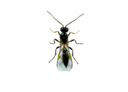
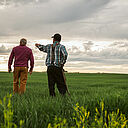
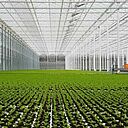
on the farm. Hendriks releases Montdorensis every week on half of his crop – the even rows one week, the odd rows the next. He hangs a sheet of insect netting
of over 35 years of accumulated expertise coupled to the latest technology – our best bumblebees, technically advanced hives, combined with our customized
Microdochium nivale (Monographella nivalis, Fusarium nivale) Foot rot of cereals General Foot rot of cereals, caused by the fungal pathogen Microdochium nivale (formerly known as Monographella nivalis
Fusarium spp. is a group of soil-borne fungi with many different species. Fusarium is widespread and can infect a range of host crops. Many species are considered weak pathogens and can only infect wo
Venturia inaequalis Apple scab General Venturia inaequalis is an ascomycete fungus that causes apple scab disease Life cycle and appearance of Apple scab Venturia inaequalis overwinters in the form of
Ustilago nuda (Ustilago segetum var. nuda, Ustilago nuda f.sp. hordei) Loose smut of barley General Ustilago nuda f.sp. hordei affects barley and can destroy a large proportion of the crop. It is also
Botrytis cinerea (Botryotinia fuckeliana) Grey mould General Grey mould ( Botryotinia fuckeliana / Botrytis cinerea ) is a commonly found fungus in many environments. It survives in plant parts like b
Fusarium oxysporum Fusarium wilt General Fusarium is a group of soil-borne fungi with many different species. Fusarium is widespread and can infect a range of host crops. Many species are considered w
Pythium aphanidermatum Damping-off General Pythium is considered a ‘weak pathogen’, meaning that it can usually only affect plants that are in a sub-optimal condition or suffer from stress, caused for
Erysiphe, Podosphaera, Oidium, Leveillula spp. Powdery mildew General Powdery mildew is a fungal disease that is caused by many different species of fungi such as Erysiphe, Podosphaera, Oïdium, Leveil