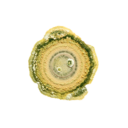
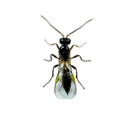
General The diamond back moth (Plutella xylostella) belongs to the family of Plutellidae . It only attacks Brassicaceae species, including cruciferous weeds. The diamond back moth (Plutella xylostella
General The cabbage moth (Mamestra brassicae) is a highly polyphagous defoliator. Besides being a major cabbage pest, it feeds on 70 plants of 22 families, among them crops such as sweet pepper, tomat
General Impatiens thrips (Echinothrips americanus) is an increasing problem in greenhouse cultivation, having spread to many countries within the last 30 years. The thrips have mostly been able to spr
General The potato aphid ( Macrosiphum euphorbiae ) is of North American origin, but is these days distributed throughout the world. It is a highly polyphagous species with a preference for Solanaceae
General The goat moth ( Cossus cossus ), is a pest of broad-leafed trees. It is most often found in birch, ash, willow and elm but can also attack fruit trees. It is widespread in Europe. Damage sympt
Overview May beetles are beetles from the Scarabaeidae family, and are plant-eating species from the Melolonthinae subfamily. Although this subfamily contains a number of species which cause damage to
General The blackcurrant aphid, Cryptomyzus galeopsidis , attacks black currant and also red current. It is widespread throughout Europe and also present in the Russian Far East and North America. Dam
General The shallot aphid, Myzus ascalonicus , is extremely polyphagous. It feeds on crops such as onions, shallots, strawberries, lettuce, brassicas and potatoes and many ornamentals . The shallot ap
General The rose aphid, Macrosiphum rosae , is a serious and often abundant pest of roses. It is virtually cosmopolitan and widely spread in Europe. Damage symptoms Infestations with rose aphids retar
General Acyrthosiphon malvae rogersii is a pest of strawberry that is widely distributed in northern and western Europe. Damage symptoms Wingless aphids may form large colonies on young strawberry fol